
What Causes Varicose Veins? Causes, Risk Factors, and When to See a Doctor
Medically reviewed by Dr. Dvora Nelson, MD, board-certified in phlebology
If you’ve noticed bulging, rope-like veins on your legs, you’ve probably wondered what is actually going on beneath the skin. The short answer is that varicose veins almost always come down to one thing: vein valves that are no longer doing their job.
Knowing what causes varicose veins can take some of the worry out of spotting them. It also helps explain why they tend to run in families, show up during certain life stages, and become more noticeable over time.
In this post, Nelson Vein and Surgical Services walks through how varicose veins form, the five key risk factors behind them, the symptoms worth watching for, and when it makes sense to see a vein doctor. Whether you just spotted your first bulging vein or have been living with achy legs for a while, you’ll leave knowing what is happening and what to do next.
Key Takeaways
- Varicose veins form when the one-way valves inside your leg veins stop working, letting blood flow backward and pool.
- Five known risk factors play a role: aging, hormonal shifts, family history, prolonged sitting or standing, and obesity.
- Aching, heaviness, swelling, and skin changes are worth paying attention to, and a vein that turns hard, warm, or painful needs prompt care.
- Treatment is often covered by insurance when it is medically necessary, and an evaluation is the first step.
What Causes Varicose Veins? How They Actually Form
Your leg veins have a tough job. Every time you stand, walk, or sit, they have to move blood back up toward your heart, working against gravity the whole way.
To make that possible, small one-way valves sit inside your veins. Each valve opens to let blood move upward, then closes to keep it from sliding back down. Your calf muscles help too, squeezing the veins as you move and pushing blood along from one valve to the next.
Problems begin when those valves stop closing completely. This usually happens because the vein wall has lost elasticity or has been stretched out over time. When the wall widens, the valve flaps no longer meet in the middle, and a small gap opens between them.
Once a valve fails, blood does not keep traveling upward the way it should. Some of it flows backward and pools in the vein. Doctors call this backward flow venous reflux, and when it becomes an ongoing problem, venous insufficiency. The pooling raises the pressure inside that section. Over time, that added pressure keeps stretching the vein, which can strain the valves nearby.
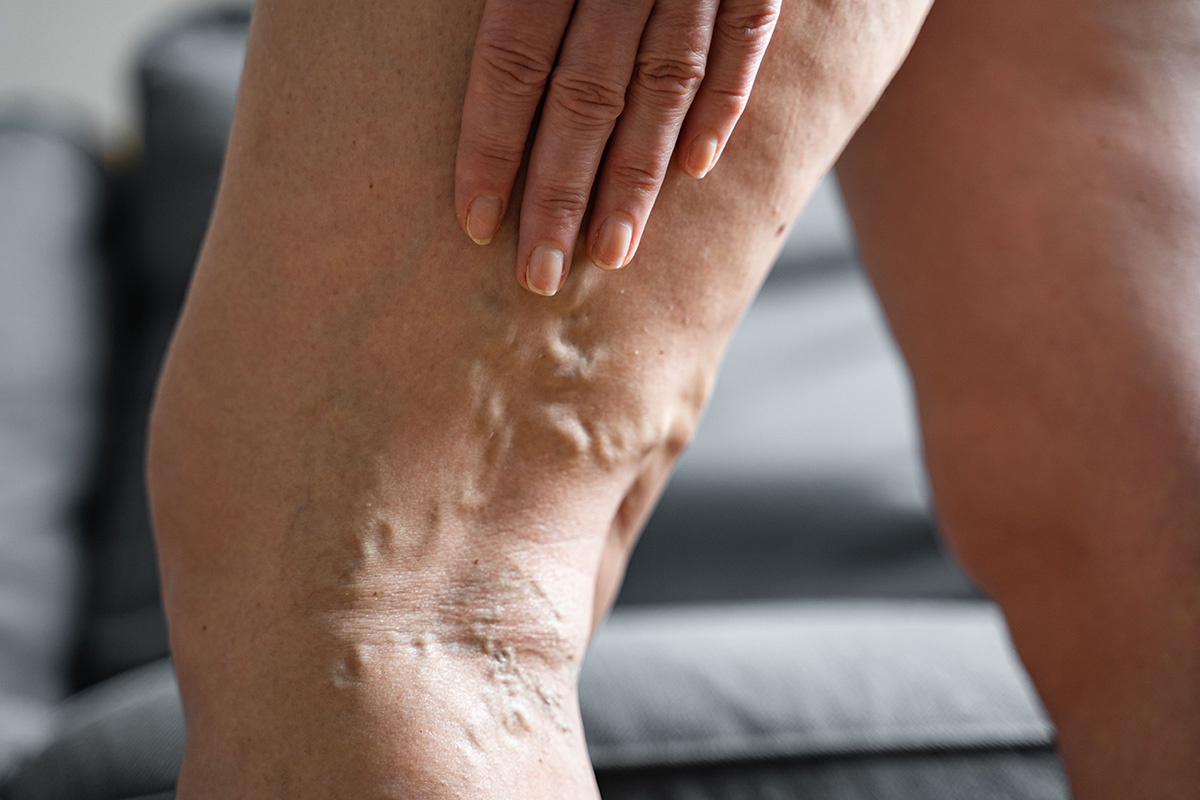
Eventually the vein swells, bulges, and twists beneath the skin. That visible, rope-like appearance is what we call a varicose vein.
It may help to picture a garden hose fitted with a backflow valve. While the valve seals, water moves in one direction. Once it wears out, water slips backward and collects behind it, and the hose bulges where the pressure builds up. Your veins behave much the same way.
The good news is that this is a mechanical problem with a clear explanation, which means it can be evaluated and treated. The risk factors below explain why some people’s valves wear out sooner than others.
The Risk Factors Behind Varicose Veins
Valve failure is the mechanism, but certain factors make it more likely to happen. Five stand out.
Aging
Veins do not stay as flexible as they once were. Over the years, vein walls and valves naturally lose elasticity, which makes it easier for valves to stop sealing properly. That is why varicose veins become more common as we get older, even in people who take good care of their legs.
Hormonal Shifts
Hormones influence how relaxed or firm your vein walls are. Pregnancy, menopause, and birth control are the three common triggers, because each changes estrogen and progesterone levels in ways that can relax the vein walls. A relaxed wall is more likely to stretch, and a stretched wall can keep a valve from closing fully. Pregnancy also adds extra blood volume, which puts more demand on your veins.
Family History
If your parents or grandparents had varicose veins, you may be more likely to develop them too. Some people inherit vein walls or valves that are naturally weaker. Family history raises your odds, but it is not a guarantee, and plenty of people with affected relatives never develop varicose veins themselves.
Prolonged Sitting or Standing
Your calf muscles work like a pump, squeezing blood upward each time you walk. When you stay in one position for hours, that pumping action slows down and blood has an easier time pooling in your lower legs. Long days at a desk or on your feet can add up over time. For practical tips, read our post on occupational hazards for veins.
Obesity
Extra body weight puts added pressure on the veins in your legs. Over time, that constant strain makes it harder for valves to hold blood in place, which increases the chance that they will fail. Maintaining a healthy weight can help ease some of that pressure.
Noticing changes in your legs and wondering where you fit? A vein evaluation can give you clear answers.
Symptoms to Watch For
Varicose veins do not look or feel the same for everyone. Some people see a change in how their legs look long before they feel anything, while others notice discomfort first. Because the symptoms often build gradually, they are easy to brush off as tired legs or a long day on your feet.
Here are the signs that may point to a problem with your vein valves:
- Visible bulging or twisted veins, often blue or purple, that sit close to the skin
- Aching or a heavy feeling in your legs, especially at the end of the day
- Swelling in your ankles or lower legs
- Itching or irritated skin near a vein
- Cramping in your legs, including at night
- Skin discoloration, or sores that heal slowly, in more advanced cases
Not everyone with varicose veins has every symptom, and the number of symptoms does not always match how large the veins look. A small vein can cause real discomfort, while a larger one may cause little. If any of these sound familiar, it is worth having them checked.
When to See a Vein Doctor
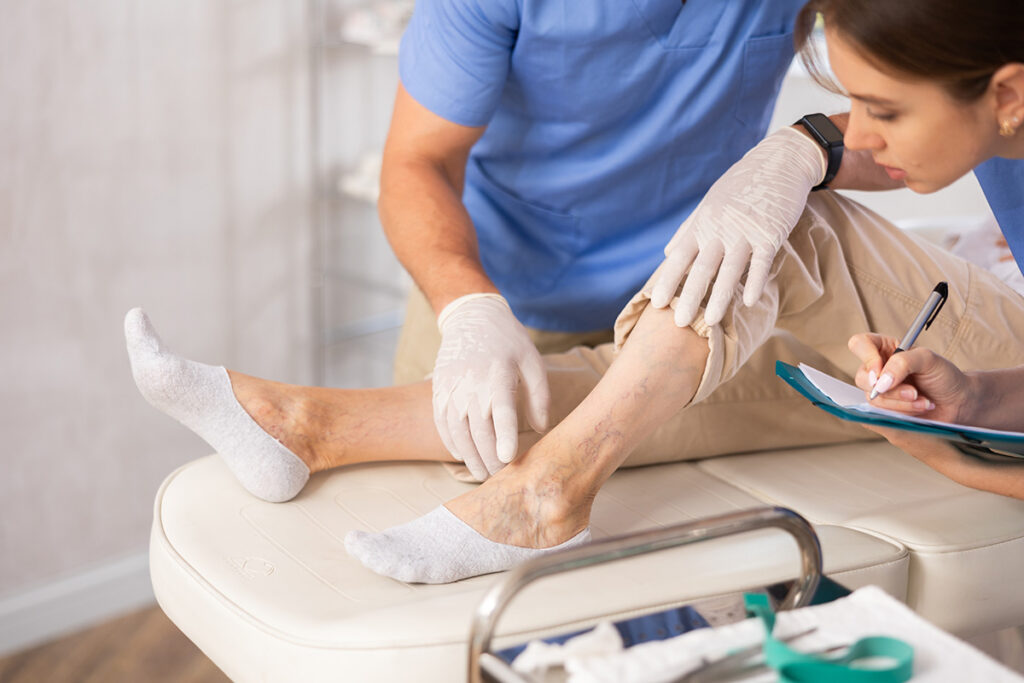
Should you see a vein specialist? You do not need to wait for severe symptoms to ask about your legs. It makes sense to book an evaluation if:
- Aching, heaviness, or swelling is getting in the way of work, exercise, or sleep
- You notice skin changes near a vein, such as discoloration, dryness, or sores that are slow to heal
- Your veins are getting more noticeable or more uncomfortable over time
- You simply want to improve how your legs look
One situation calls for faster action. If a vein suddenly becomes hard, warm, or painful, or you develop swelling in one leg, get medical attention promptly. These can be signs of a blood clot, and they should be checked right away instead of waiting for a routine appointment.
For everything else, an evaluation with Dr. Nelson is a straightforward next step. She will look at your symptoms, examine your legs, and explain what is going on in plain language. You can learn more about how varicose veins are diagnosed before your visit so you know what to expect.
Is Treatment Covered by Insurance?
In many cases, yes. Insurance plans often cover vein treatment when it is medically necessary, meaning your veins are causing symptoms or complications, rather than being treated purely for appearance. Symptoms such as aching, swelling, and skin changes are the kind of thing a plan typically looks for.
Coverage details vary from plan to plan, including what documentation is required and which vein treatment options are included. Because of that, the best time to ask is during your consultation. Our team can walk you through what to check with your insurance provider so there are no surprises later.
If you are worried about cost, do not let that keep you from finding out what is happening in your legs. An evaluation is the step that tells you whether your veins need treatment at all.
Get Answers About Your Varicose Veins
Varicose veins have a clear, well-understood cause: valves inside your leg veins that no longer close the way they should. Aging, hormonal shifts, family history, long periods of sitting or standing, and excess weight can all make that more likely, and the symptoms are often your body’s early signal that something has changed.
The next step is simple. At Nelson Vein and Surgical Services in North Olmsted, we focus on education, so you understand what is happening in your legs and take part in every decision about your care. If you have questions, you are welcome to bring a partner or loved one along to your visit.
When you are ready for answers, we are ready to help. Call our office at 440-617-6061 or schedule online.
FAQs
Can varicose veins be prevented?
Not entirely, since genetics and aging are out of your control. You can lower your risk by staying active, avoiding long stretches in one position, elevating your legs when you rest, wearing compression stockings if recommended, and maintaining a healthy weight. These habits support circulation and ease strain on your valves.
Are varicose veins just a cosmetic issue?
Sometimes, but not always. Some varicose veins cause no symptoms and are mainly a cosmetic concern. Others reflect a deeper valve problem and cause aching, swelling, or skin changes that affect daily life. An evaluation can tell you which applies to you and whether treatment makes sense.
Do varicose veins get worse over time if untreated?
They can. Varicose veins often change gradually, and symptoms may become more noticeable over time, especially when the underlying valve problem goes unaddressed. Progression looks different for everyone, so the best way to know where you stand is to have your legs evaluated.
What is the difference between varicose veins and spider veins?
Spider veins are small, thin, web-like vessels near the skin’s surface. Varicose veins are larger, raised, and rope-like, and they are more likely to cause symptoms. Smaller veins are often treated with sclerotherapy.
Is a varicose vein diagnosis painful or invasive?
No. Diagnosis typically starts with a conversation about your symptoms and a physical exam of your legs. It may also include an ultrasound, which uses sound waves and does not involve needles or incisions. Most people find the process comfortable.